You're the Last Backup: What Wedding Videographers Owe Clients After the Final Cut Is Delivered

Photo: Dan Lundberg, CC BY-SA 2.0, via Wikimedia Commons
Here's a conversation that plays out in wedding videography Facebook groups every few months: a couple emails their videographer five years after the wedding. The cloud link expired. The laptop with the files died. The USB drive from 2019 won't read. Could you possibly send the video again?
Sometimes the answer is yes. Sometimes it's no, because the videographer cleared out their drives to make room for new projects. And sometimes it's no because the videographer's own archive failed — which means that wedding video simply doesn't exist anymore, anywhere.
That last scenario is more common than anyone in the industry likes to admit.
The Couple's Copy Is a Dying Breed
Ask around and the pattern is clear: clients treat delivered files like printed photos from the 90s. They get stored on one device, that device gets replaced, and somewhere in the move the files vanish. A 2019 survey by the digital storage company Backblaze found that roughly one in four people had lost files to hardware failure, accidental deletion, or theft — and wedding videos, which live on a single drive or an expired Dropbox link, are uniquely vulnerable.
Think about the typical delivery: a download link that dies in 90 days, or a USB drive tossed in a junk drawer. That's not an archive. That's a countdown timer.
Which means the working professional is, by default, the last line of defense. Your archive of delivered films may be the only surviving master of someone's most important day. That's a heavy realization for a solo shooter with a closet full of hard drives.
What Are You Actually Obligated to Keep?
Legally, in most US states, very little. Your contract defines the obligation, and most contracts say delivery is the finish line. Some states have general retention rules for business records, but your raw footage from a 2017 wedding in Scottsdale is nobody's legal requirement.
Ethically and reputationally, though, it's a different story. Wedding vendors live on referrals, and nothing burns goodwill like telling a grieving widow you deleted her husband's wedding film to free up space for b-roll.
A growing number of pros are settling on a tiered approach:
- Delivered films (the final edits): Keep forever, or at least 10+ years. These are small — a 20-minute film at high bitrate is maybe 15-30 GB — and they're the files people will come asking for.
- Full ceremony and key edits: Keep 5-7 years. Longer events and to-the-point cuts hold most of the irreplaceable content.
- Raw footage: Keep 1-3 years, then let it go. Nobody has ever called asking for the 4 hours of reception dancing footage from 2016.
Write your retention policy into your contract so clients know exactly what they're getting and for how long. Surprises are what kill relationships; clear terms build them.
The Storage Math That Doesn't Destroy Your Margin
The problem, of course, is that "keep everything forever" sounds great until you price it out. A busy wedding shooter might deliver 25-40 projects a year. Keep just the final films and you're adding a terabyte or so annually — manageable. Keep everything raw and you're staring at 40+ TB a year, which turns into a cloud bill that eats your gear budget.
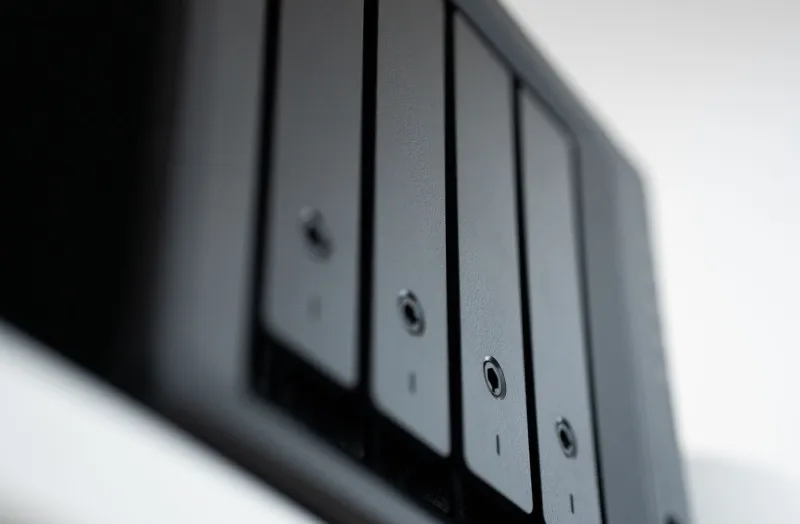
This is where a lot of pros are going local-first. A pair of large NAS drives in a RAID configuration, mirrored to a second location (a safe deposit box, a studio partner's office, a relative's house two states away), covers the delivered-films tier for a few hundred dollars a year. Cold cloud storage like Amazon S3 Glacier or Backblaze B2 can handle the deep archive tier at pennies per gigabyte — fine for files you'll hopefully never touch.
The workflow matters as much as the hardware. The pros who survive this long-term do three things:
- Standardize the folder structure. Client name, date, event type, delivered vs. raw. Every project identical. When someone calls in 2031, you find the file in 30 seconds.
- Log everything. A simple spreadsheet — client, event date, what's archived, where it lives, when it's scheduled for deletion — turns your archive from a mystery into a system.
- Schedule verification. Drives rot quietly. An annual check that spins up the archive and spot-checks files catches bit rot before it becomes data loss.
Make the Handoff Part of the Product
There's one more move that separates the thoughtful from the careless: treating delivery as a preservation event, not just a file transfer. Some videographers now include a physical archival copy — an archival-grade M-DISC Blu-ray or a rugged SSD — alongside the download link, plus a plain-English note telling the couple to copy the files to two places.
It costs maybe $30 per project. It dramatically improves the odds the client's copy survives. And it positions you as the vendor who thinks about the next 30 years, which in a referral-driven business is worth a lot more than $30.
Your clients trusted you with the one day they can never reshoot. The delivered file was the product — but the archive you keep afterward is the real promise. Keep it deliberately, keep it organized, and keep only what matters. Future-you, fielding that decade-later email, will be glad you did.